
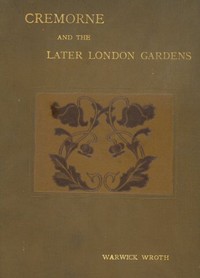
Cremorne and the later London gardens by Warwick William Wroth
If you think of Victorian London, you probably picture chimneys, crowded streets, and strict social rules. Warwick William Wroth's book throws that image out the window. Instead, he guides us through the sparkling, noisy, and often scandalous world of London's great pleasure gardens, focusing on the famous (and infamous) Cremorne Gardens in Chelsea.
The Story
There isn't a traditional plot with characters. The 'story' is the life and death of these gardens, especially Cremorne. Wroth starts by showing us these spaces in their prime. Imagine a summer night: thousands of people from all walks of life mingling under colored lamps, listening to orchestras, watching fireworks, or daring to go up in a hot air balloon. It was chaos, culture, and a bit of mischief all in one. Then, he traces the slow pressure that killed them. Noise complaints from new wealthy neighbors, moral panic from newspapers about loose behavior, and the relentless demand for land for docks and railways. We see Cremorne's long fight to survive through lawsuits and public campaigns, before it finally closed in 1877 and was literally erased by new building projects.
Why You Should Read It
What I loved was how personal it feels. Wroth wrote this over a century ago, and his passion for rescuing these stories from oblivion is clear. He isn't just listing facts. He's sharing gossip from old magazines, describing hilarious advertisements, and letting you hear the echoes of the past. The book makes you feel the loss. It's not just about buildings closing; it's about a whole way of relaxing and socializing disappearing. It asks a great question: what happens to a city's joy when its dedicated spaces for fun are paved over? Reading it turns a simple walk in London into a richer experience. You start seeing ghosts of gazebos and dance floors where now there are just office blocks.
Final Verdict
Perfect for history buffs who want something beyond kings and wars, or for any Londoner curious about the secret life of their city. It's also a great pick for someone who enjoys true stories about quirky, lost pieces of social history. The writing is old-fashioned but clear, and the chapters are short and focused on different gardens or themes. Don't expect a fast-paced thriller. Do expect a gentle, absorbing, and strangely poignant tour of a vanished playground, led by a guide who truly wished he could have seen it for himself.
Thomas Flores
6 months agoThis is one of those stories where it provides a comprehensive overview perfect for everyone. Truly inspiring.
Jessica Torres
10 months agoPerfect.








Kimberly Young
10 months agoJust what I was looking for.